Brazil: A Future Great Power or a Permanent Promise?
Brazil appears to be a nation whose development has been held back by the quality of its leadership.
Soon after gaining independence from Portugal in 1822, Brazil was already seen by many foreigners as a future great power because of its immense territory, natural resources, and demographic potential.
Nearly two centuries later, Brazil is still often described as “the country of the future” – a phrase popularized by Stefan Zweig in his book Brazil, Land of the Future. Yet that future has never fully materialized.
The fundamental problem has not been a lack of potential, but a lack of leadership capable of transforming that potential into national development. For generations, Brazil has struggled to produce leaders with the vision, discipline, and institutional commitment required to guide such a vast country toward its natural position in the world.
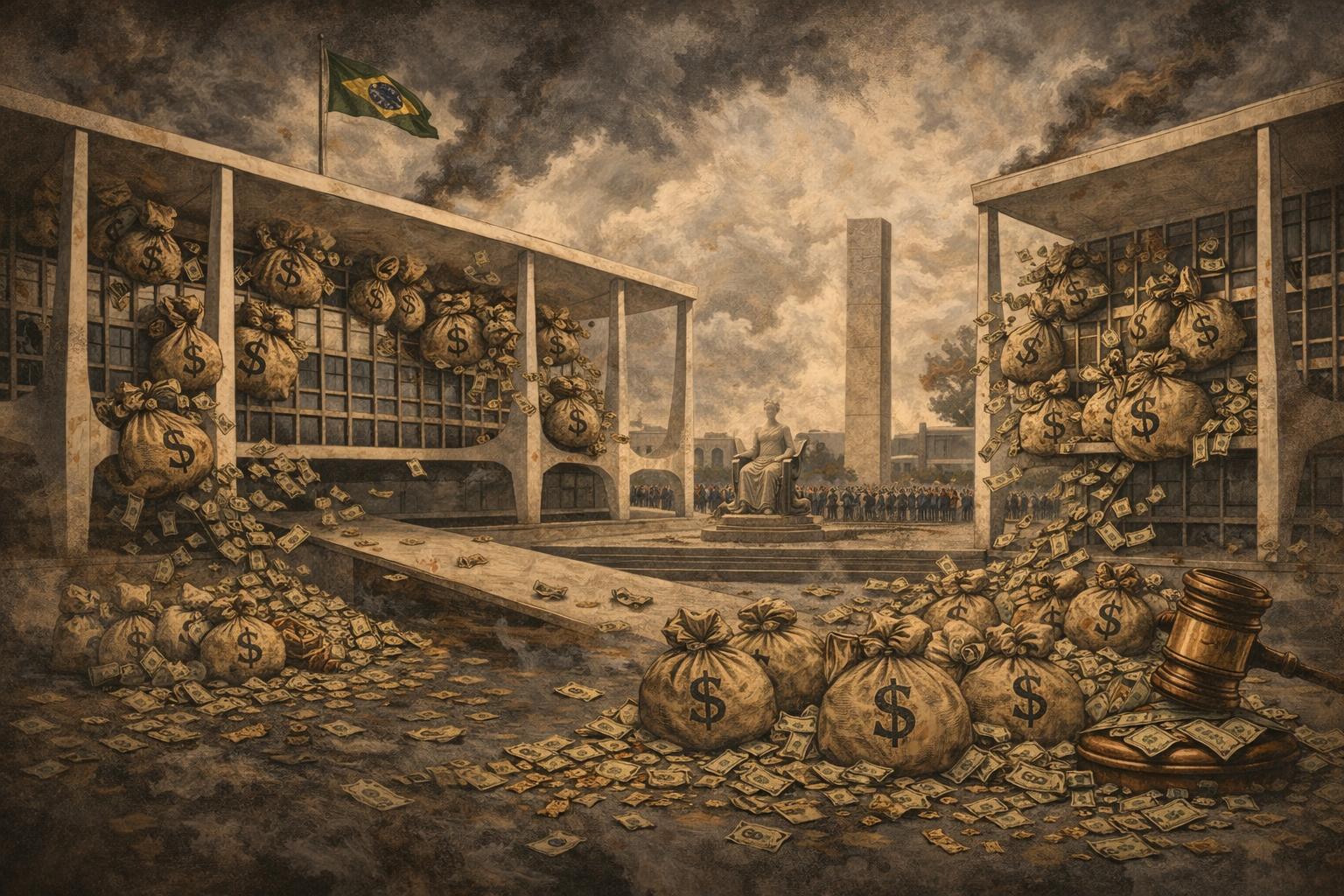
Meanwhile, the elites of the three branches of government – executive, legislative, and judiciary – especially in the judiciary and parts of the political class, are among the best paid in the world and have been remarkably effective at expanding their own privileges. While Brazil’s immense resources continue to feed international expectations, many foreign observers increasingly question whether the country can generate the leadership necessary to convert its extraordinary potential into real progress.
Brazil should not be a difficult country to govern
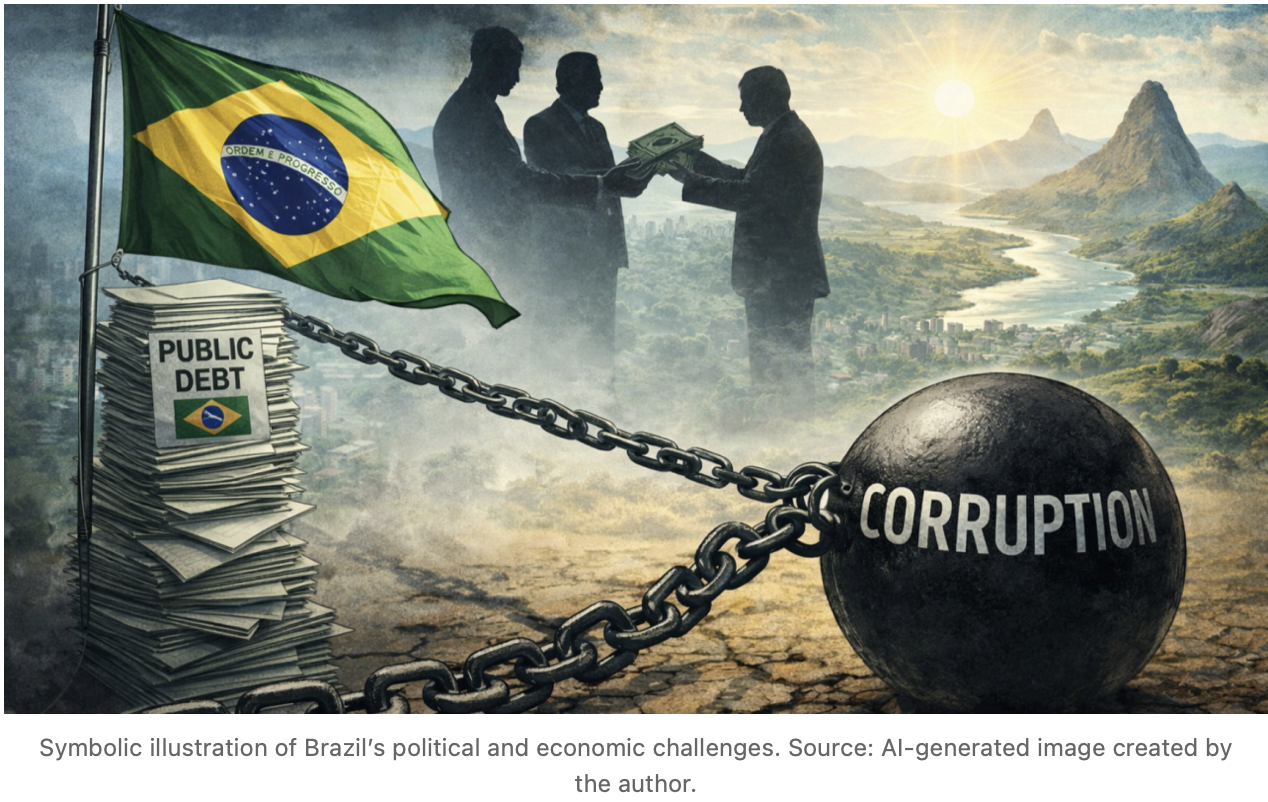
It possesses vast natural resources, a large internal market, and immense economic potential. Yet since gaining the freedom to determine its own future, Brazilians have repeatedly discovered that the country lacks perhaps the most essential resource of all: leaders with the ethical integrity and the capacity to guide the nation’s development. Too often, those entrusted with power have chosen personal enrichment over responsibility toward the country and its people
Foreigners who had direct knowledge of Brazil often described it as a nation destined to become a future superpower:
“Whoever, like the author, has seen the world – not only circumnavigated it, as he has, but also had the opportunity to observe the interior of the greatest European empires – must find the remarkable contrast between the institutions of the states in America and those in Europe all the more striking. And anyone who is not entirely unfamiliar with these matters will admit that Brazil, among all the countries of the New World, is the most magnificent and the most blessed, offering the most promising hopes.” (A French Business Man traveling in Brazil, his book from 1828).
=> Brazilian politicians frequently exploit this hope during election periods, promising the population outcomes they are neither prepared nor capable of achieving.
In a publication of the Weltwirtschaftliches Archiv of the University of Kiel (1920), the following statement can be found:
“Brazil has rightly been called ‘the greatest storehouse of raw materials in the world.’
From a book published in 1957, in which one of the German authors confidently claimed “…to know Brazil entirely and through direct personal experience better than even the great majority of native Brazilians…”:
“In terms of territorial extent, surpassed only by the Soviet Union, Canada, and China, Brazil is far superior to the United States of North America in terms of economic preconditions. The utilization of these conditions is still, to a large extent, only in its beginnings, yet they represent an inexhaustible treasure for future generations such as scarcely any other nation on earth possesses. In its hospitable and energetic people we find the guarantee that Brazil will and must develop, in a rapid and unstoppable ascent, into one of the economic giants of the future.”
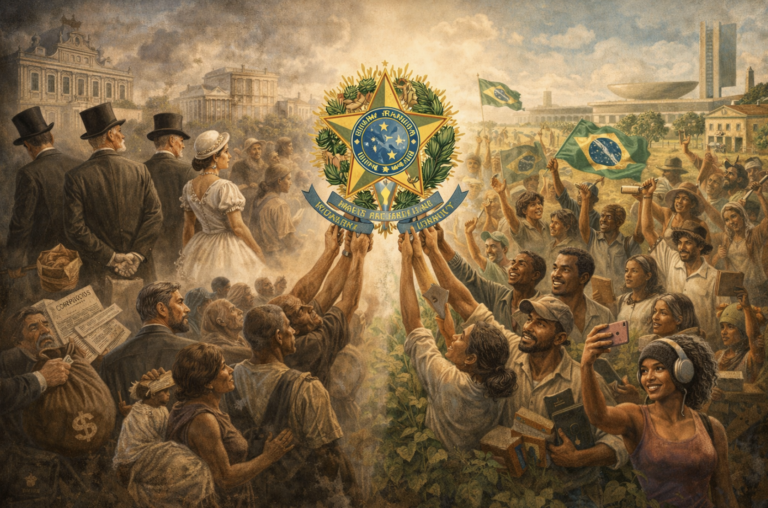
In 1893, four years after the establishment of the Republic, Sílvio Romero denounced the new regime and its elites as incapable of establishing a free democracy.
“And then this systematic disdain for the people, who are declared incompetent to choose their own political representatives and are plagued by submissiveness in exercising this right… is nothing less than the disastrous and extravagant claim to divide the legitimate majority of a nation into two groups – on one side the privileged, those who possess a monopoly on enlightenment and moral dignity, and on the other the incapable and the subjugated, those who are supposedly incapable of any proper political action! For the former, government, direction, and command; for the latter, eternal tutelage, minority status, and perpetual incompetence. This is nothing but the regime of privilege in its newest form, but privilege has always meant abuse and oppression.” “…This absolutist ‘bankism’ is nothing other than an aristocracy of money, a patriciate of capital – the most corrupt and dishonest of all aristocracies.
Sílvio Romero (1851–1914) was a Brazilian intellectual, literary critic, historian, and social thinker from the northeastern state of Sergipe who played a significant role in shaping Brazilian cultural and political thought in the late nineteenth and early twentieth centuries.
In his book, the Baron de Gamboa wrote already in the nineteenth century:
“We have debts from 1822 to 1831 amounting to 489:140$781 (four hundred eighty-nine million, one hundred forty thousand seven hundred eighty-one réis). Would it not be appropriate to deal effectively and definitively with these old debts?”He continued: “According to the report, our foreign debt currently amounts (in the year 1867) to £14,417,500, or roughly £150,000,000. The expenditures for interest, commissions, and brokerage fees that will burden the fiscal year 1868–1869 are budgeted at £8,277,000, not including a loan from 1839 that will mature in January 1869 and will then amount to £277,800.”
The Baron de Gamboa (Portuguese: Barão de Gamboa) was a Brazilian imperial-era author and public commentator from the 19th century who wrote about Brazil’s economy, public finances, and national development during the period of the Empire of Brazil (1822–1889). The problems discussed today – public debt, fiscal management, and political responsibility – were already being debated in the nineteenth century by observers such as the Baron de Gamboa.
Let us now examine the last two government periods: 2019 – 2022 and 2023 – 2026
Sources vary depending on the methodology, but the trend is clear: a sharop increase in 2020 followed by a rapid decline in 2021 – 2022Sources vary depending on the methodology, but the trend is clear: a sharop increase in 2020 followed by a rapid decline in 2021 – 2022During the period 2019 – 2022
1) 2019 – High but stable debt
When Bolsonaro took office in 2019, Brazil already had a relatively high public debt of about 87% of GDP. This was the result of:
- fiscal deficits after the 2014–2016 recession
- rising pension expenditures
- slow economic growth.
The government began implementing fiscal reforms, especially pension reform, aimed at stabilizing the debt trajectory.
2) 2020 – Debt surge during the pandemic
In 2020 Brazil’s debt rose sharply to around 96–99% of GDP, the highest level in modern Brazilian history.
The increase was caused by:
- emergency social payments (Auxílio Emergencial)
- government support programs for businesses
- sharp GDP contraction during the pandemic
This combination raised spending while reducing the size of the economy, pushing the debt ratio upward.
3) 2021 – Beginning of fiscal correction
In 2021 the debt ratio fell to around 85% of GDP.
This improvement occurred because:
- GDP rebounded strongly
- inflation increased nominal GDP
- emergency spending programs were reduced
- commodity exports improved fiscal revenues
4) 2022 – Rapid decline in the ratio
By 2022 the debt ratio had fallen further to roughly 73–79% of GDP depending on the measurement method.
Several factors contributed:
- strong commodity exports
- high inflation increasing nominal GDP
- higher tax revenues
- tighter fiscal management after the pandemic emergency period.
Overall interpretation (2019–2022)
The debt trajectory during this period shows three distinct phases:
- Inherited high debt (2019)
- Extraordinary expansion during the pandemic (2020)
- Rapid reduction through economic recovery and inflation effects (2021–2022)
The decline after 2020 was unusually fast because the debt ratio fell by about 15 percentage points in only two years.

During the period 2023 – 2026
Brazil’s public debt (mainly measured as gross government debt relative to GDP) has remained high and slightly rising during the period 2023–2026. The exact percentage depends on the method used (Brazilian Central Bank vs. IMF methodology), but the general trend is similar across sources. Some international institutions (using broader definitions) estimate even higher figures. For example, IMF-based projections suggest the debt ratio could approach around 94–95% of GDP by 2026 under certain assumptions.

Sources vary depending on the methodology, but the trend is clear: some international institutions (using broader definitions) estimate even higher figures. For example, IMF-based projections suggest the debt ratio could approach around 94–95% of GDP by 2026 under certain assumptions. (=>>>)
1) 2023 – Debt begins rising again
In 2023 Brazil’s public debt reached about 74–75% of GDP, reversing the declining trend observed in the previous two years.
This increase resulted from:
- renewed fiscal expansion under the new administration
- rising social spending and public sector expenditures
- higher interest payments due to elevated interest rates
Although the economy continued to grow moderately, the increase in government spending began to exert upward pressure on the debt trajectory.
2) 2024 – Fiscal pressure intensifies
In 2024 Brazil’s debt continued to rise, reaching approximately 76–78% of GDP depending on the measurement methodology.
Several factors contributed to this development:
- expansion of social programs and public transfers
- increased rigidity of the federal budget
- continued high interest rates raising the cost of debt servicing
- slower fiscal consolidation than expected
While economic activity remained relatively stable, the fiscal deficit persisted, limiting the government’s ability to stabilize the debt ratio.
3) 2025 – Structural pressures remain
By 2025 Brazil’s public debt was estimated to approach 78–80% of GDP, reflecting ongoing fiscal pressures.
Key drivers included:
- structural increases in mandatory expenditures
- persistent primary deficits
- continued high debt servicing costs
- limited progress in structural fiscal reforms
Although Brazil’s economy maintained moderate growth, fiscal policy remained expansionary, preventing a meaningful reduction in the debt ratio.
Overall interpretation (2023–2025)
The debt trajectory during this period shows a reversal of the fiscal improvement achieved between 2021 and 2022.
The period can be characterized by:
- the stabilization of the debt ratio in 2023
- a gradual upward trend beginning in 2024
- continued fiscal pressures by 2025
Unlike the previous period (2019–2022), when debt surged due to an extraordinary external shock and then declined rapidly, the increase after 2023 reflects structural fiscal imbalances and rising public expenditures.
If these trends persist, Brazil’s public debt may continue to rise gradually in the coming years, posing increasing challenges for fiscal sustainability and economic policy.
Brazil Since 2000: Examining the Record of Governance – the Record Speaks for Itself
In some of Brazil’s most widely circulated newspapers, one can find articles such as the following. When readers look back at the record of government periods since 2000, they can draw their own conclusions about the quality of the results delivered by successive administrations and by the three branches of Brazil’s democratic state—the executive, legislative, and judiciary.
Rising expenses related to presidential travel, the so-called “secret budget” (orçamento secreto), numerous corruption scandals, growing concerns about crime and public safety, as well as repeated cases of nepotism and misuse of public resources should not be viewed as isolated events. Rather, they form part of a recurring pattern that reveals how political decisions, public spending priorities, and the conduct of those in power shape the country’s development.
Only by examining this record with honesty and critical judgment can Brazilians evaluate the true quality of their leadership and the results it has produced for a country with such extraordinary potential. A nation as rich in resources and opportunities as Brazil should not remain constrained by cycles of political incompetence, weak governance, and moral complacency. Ultimately, the future of the country will depend not only on its natural wealth but on the willingness of its citizens to demand responsibility, integrity, and genuine commitment from those who govern in their name.
“Transparency International warns of organized crime infiltrating the ‘highest spheres of the state.’ The organization reacted to the scandal that revealed the involvement of Daniel Vorcaro, owner of Banco Master, with Brazilian authorities and political figures.” (Estao, 5 Mar, 2026)
(>>>)
Corruption and Its Devastating Effects: Today, corruption is widely recognized across democratic societies as a systemic political and economic phenomenon. It requires strong institutional solutions and the active participation of society as a whole to ensure development, accountability, and social justice for nations and their people. (Estadao, 11 Dec, 2025 )
(>>>)
Opinion | Institutional failure is not the corruption we see, but the failure to investigate the misuse of public funds A succession of scandals reveals a paradox: the more institutions investigate allegations, the stronger the public perception becomes that the country is dominated by crime. (Estadao, 11 Mar, 2026)
(>>>)
Looking back, the question arises as to what conclusions Brazilians in the twenty-first century should draw from this historical development. The evidence suggests that many Brazilian political leaders have not primarily served the country and its population but rather their own interests. It is difficult to arrive at any other conclusion than that Brazilian politicians have often failed to work seriously toward the development of the country in accordance with its enormous potential.
Given the vast resources available to Brazil, it would have been possible to place the country on a stable path of development in which its economic and social potential could have been realized for the benefit of its people. Instead, many political actors have repeatedly managed to maneuver the country into situations in which massive debt, inflation, nepotism, corruption, and the destruction of thousands of families through poverty, lack of opportunity, and street crime have been able to flourish.
The evolution of Brazil as a sovereign country – and the reasons behind this disappointing development – are examined in greater depth in a book I am currently writing. This work is being produced without support from any government, university, or foundation, whether public or private. This independence allows me to write freely, guided by a sense of responsibility toward my fellow Brazilians since the beginning of our sovereignty and toward those who continue to struggle for this country and still believe in the ideals of Ordem e Progresso that have inspired our nation since its earliest days.
„Let us work without discouragement for the greatnessof our beloved land“
This phrase is engraved on a tomb in a cemetery in the city of São Luís, Maranhão. No one has been able to explain who is buried there – not even the National Institute responsible for preserving our historical heritage. Even in a publication dedicated to this cemetery and its tombs, the name of the person buried there is not mentioned. I contacted the professor who authored the publication, but she was also unable to identify him. I am conducting my own research in an effort to uncover the identity of the person resting there. What seems certain, however, is that the inscription reflects the spirit of a truly Brazilian republican whose memory deserves to remain alive for future generations.
Without knowledge of our history, future generations of Brazilians will never develop the sense of judgment necessary to build the country as it deserves to be built.

TRABALHEMOS SEM DESFALECIMENTO PELA GRANDEZA DE NOSSA TERRA QUERIDA
Appeal to all Brazilians
Without knowledge of our history, future generations of Brazilians will never develop the sense of judgment necessary to build the country as it deserves to be built. This is therefore my appeal to all Brazilians: do not attempt to understand the present without first understanding the history that shaped it.
Our life situation today
The history of Brazil is not an abstract narrative written only in books. It is also the history of the evolution of our own families since the earliest days of the nation. The political decisions, economic changes, crises, and opportunities of each period were lived and endured by our ancestors, including the members of our own families. Your life situation today is, in many ways, the consequence of the experiences, decisions, and circumstances faced by the generations of your family who came before you. They were the ones who bore the consequences of these developments – whether through prosperity, struggle, success, or hardship.
By reflecting on their experiences and on the circumstances in which they lived, we gain a deeper understanding of the forces that shaped their lives and influenced their successes or their limitations. This reflection allows us to develop a clearer judgment about our country and about the responsibilities of leadership.