China’s Strategic Rise and Brazil’s Untapped Potential: A Question of Governance
Observing the trajectory of China raises an important question: can democratic systems plan and execute long-term national strategies with the same consistency often attributed to China?
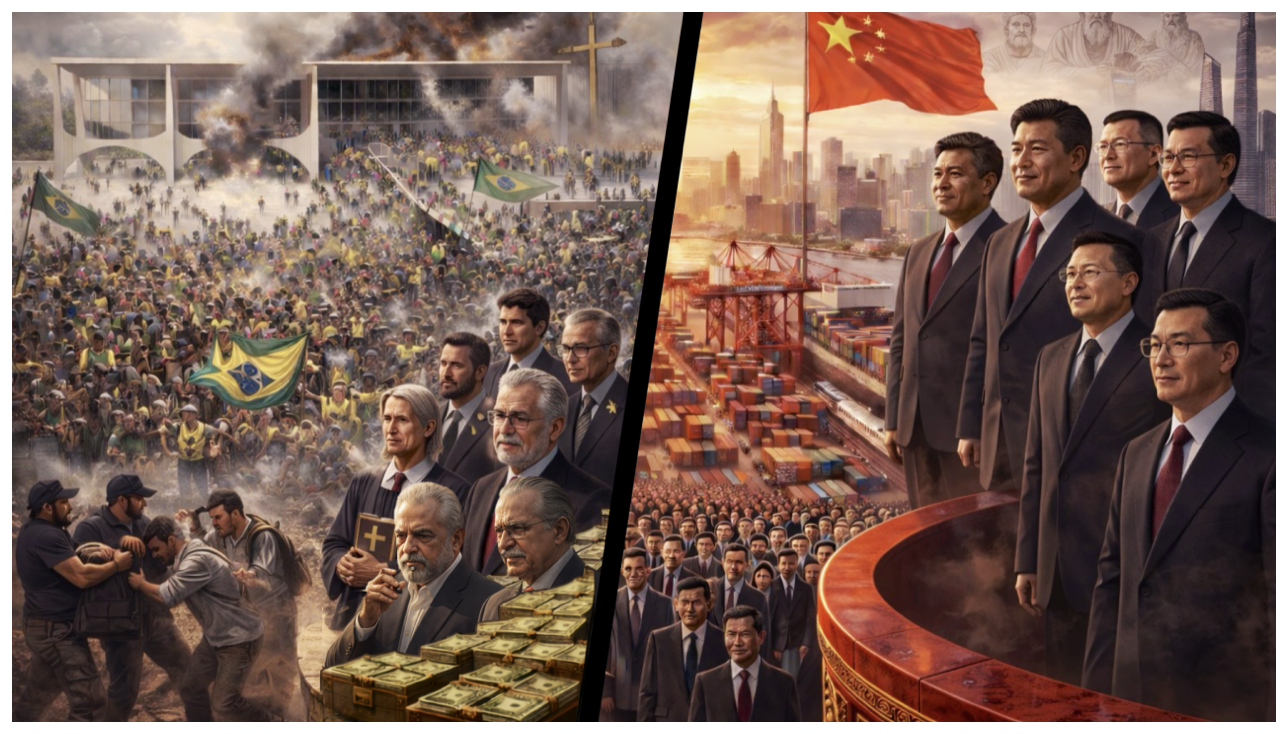
China’s development model, under the leadership of the Chinese Communist Party, has been characterized by long-term strategic planning – most visibly through its Five-Year Plans – combined with centralized decision-making and strong state coordination of industry, infrastructure, and technological development.
Since the economic reforms initiated by Deng Xiaoping in 1978, this model has enabled the country to achieve rapid economic growth and a profound industrial transformation. These reforms marked a decisive shift from a strictly planned economy toward what later became known as a socialist market economy. Key policies included agricultural reforms such as the Household Responsibility System, the establishment of Special Economic Zones to attract foreign investment, and the gradual opening of markets and private enterprise.
At the same time, significant emphasis was placed on expanding education and developing human capital. The restoration of the national university entrance examination and investments in technical and higher education helped build a workforce capable of supporting rapid industrialization and technological advancement.
Within a few decades, China lifted hundreds of millions of people out of poverty while dramatically improving literacy and education levels. According to the World Bank, more than 800 million people have been lifted out of extreme poverty since the beginning of the reform era – representing the largest poverty reduction in human history.
Through sustained economic growth, export-led industrialization, and deeper integration into the global trading system – including membership in the World Trade Organization in 2001 – China has positioned itself as one of the central actors in the global economy and emerged as a major manufacturing, technological, and financial power.
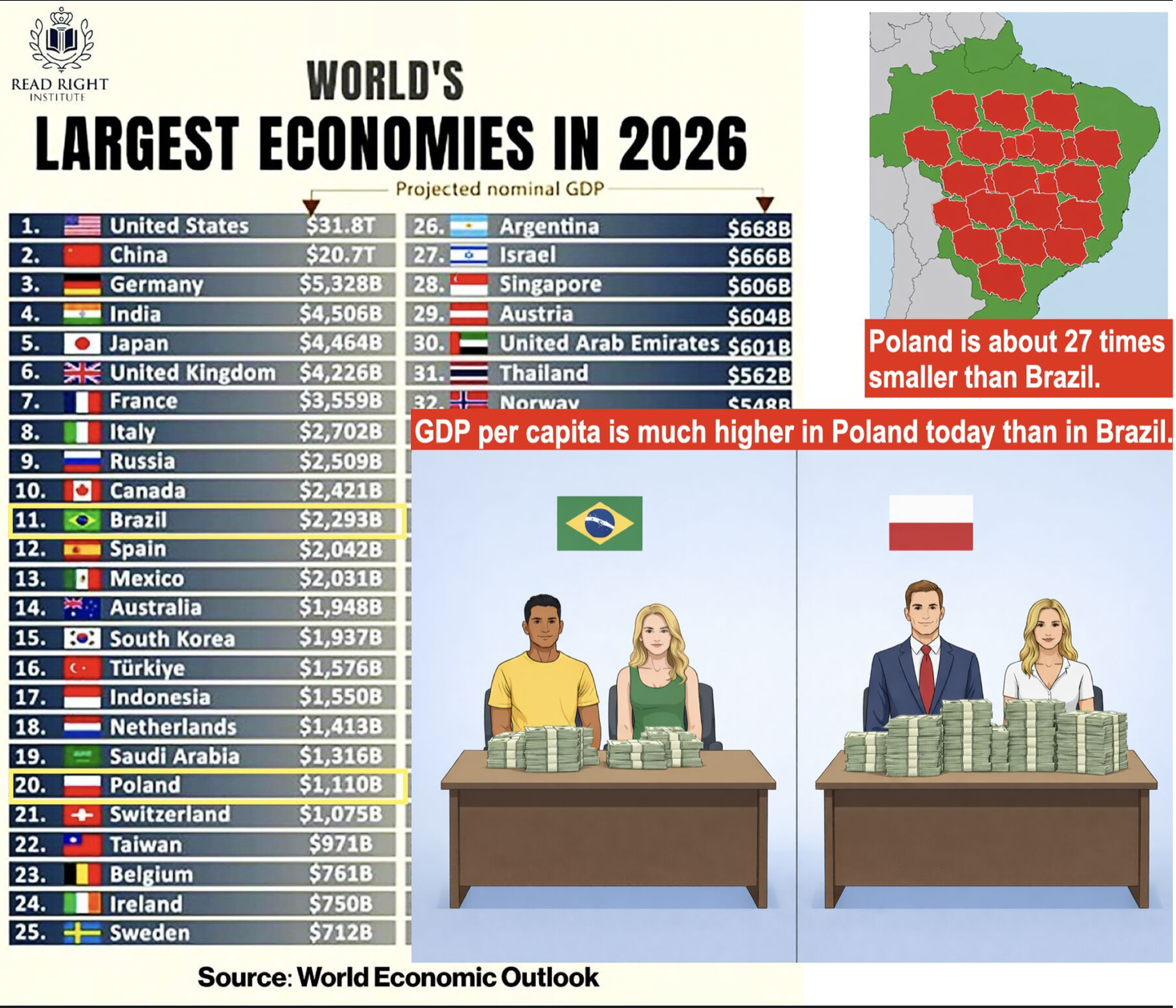
The contrast becomes particularly striking when considering a country like Brazil. Brazil is one of the most resource-rich nations on earth. It possesses vast agricultural land, enormous freshwater reserves, immense mineral wealth, and a large, dynamic population. In principle, these conditions should place the country among the most prosperous and influential economies in the world.
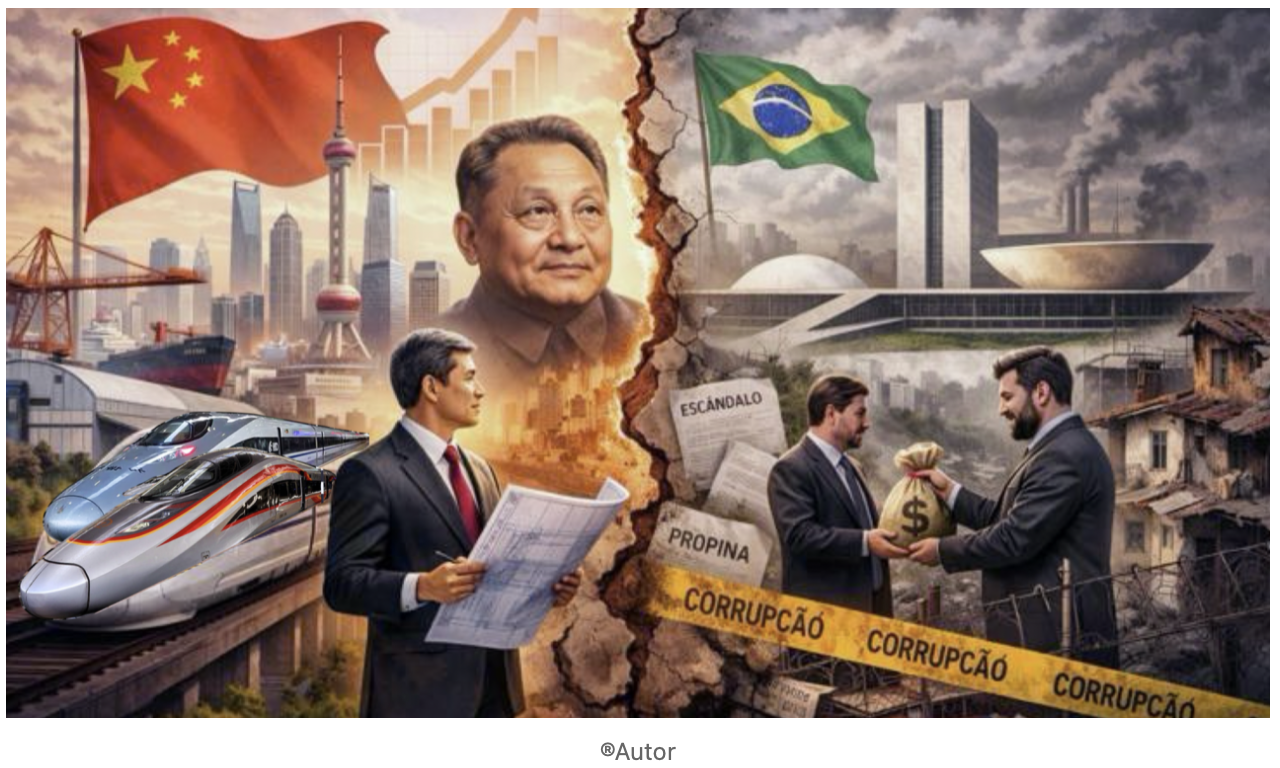
Yet historically, Brazil – one of the world’s most resource-rich and socially dynamic countries – has struggled to translate its extraordinary natural and human potential into sustained national development. Over the past decades, numerous corruption scandals – including the Mensalão scandal, the Máfia dos Sanguessugas scandal, Operação Satiagraha, the Atos secretos do Senado scandal, the Mensalão do DEM, the Caso Erenice Guerra scandal, the Brazilian Ministry of Transport corruption scandal 2011, Operação Monte Carlo (Caso Cachoeira), the Máfia do ISS scandal, the Cartel do Metrô de São Paulo scandal, the Operation Car Wash, the INSS fraud scandal Brazil, and the Banco Master financial scandal Brazil—have repeatedly revealed how public resources and state institutions were diverted to serve narrow political or private interests rather than long-term national priorities.

As a result, poverty and inequality have persisted, despite government programs such as Bolsa Família, which provide short-term financial relief but do little to promote education, skills development, or long-term professional opportunities, leaving many Brazilians trapped in cycles of dependence rather than empowered to achieve sustainable economic mobility. Coupled with high rates of criminality and social insecurity, these conditions have generated profound social pressures. According to a 2024 brochure distributed by O Estado de S. Paulo (Estadao), 67% of young Brazilians aged 16–35 expressed a desire to leave the country for better-developed nations, citing the cumulative social and economic consequences of governance failures.
These patterns illustrate that, while Brazil possesses enormous natural wealth and human potential, systemic corruption, weak institutions, and short-termist governance continue to limit the country’s ability to achieve sustained and equitable development, in stark contrast to nations capable of long-term strategic planning.
As a result, while many countries have pursued coherent long-term strategies for economic modernization, Brazil has often remained trapped in recurring cycles of political instability, short-term policymaking, and institutional inefficiency – conditions that have prevented the country from fully realizing the opportunities offered by its vast natural wealth.
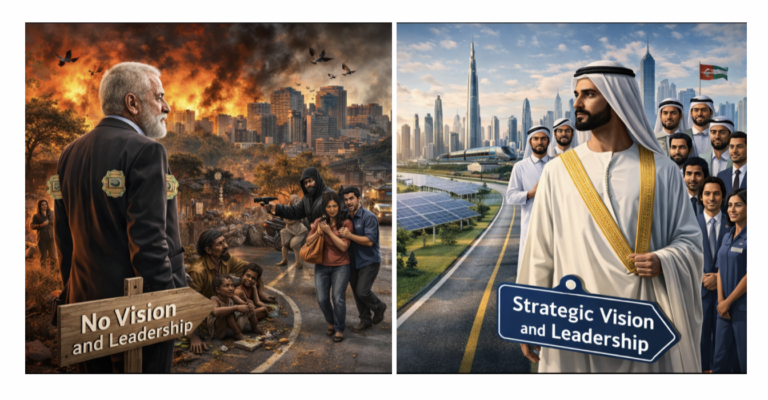
This contrast raises a broader and uncomfortable question for many democracies: how can political systems structured around short electoral cycles develop the discipline and continuity required for long-term national transformation? Finding answers to this challenge may well become one of the central political tasks of the twenty-first century.